 I gave a presentation on employee communications recently to a group of about 80 HR people representing about 60 different organizations. I asked the group, through a show of hands, to indicate how many had an internal communication plan. None. Wow. Conversely, a majority of the group had (more…)
Archive for the ‘Internal Communication’ Category
Without a Plan Your Internal Communication Efforts May Be Falling Flat
Tuesday, July 19th, 2022Are You Overlooking Your Most Important Audience?
Thursday, June 23rd, 2022 I’m often surprised that the most overlooked audience when it comes to communicating with key constituents is the internal or employee audience. Companies are generally pretty good about recognizing that they need to communicate with customers and prospects, but employees tend to be an afterthought. This may be because of the assumption that (more…)
Creating a Plan to Improve Corporate Communications
Tuesday, October 5th, 2021 Effective corporate communication has always been important. Now, though, in a hybrid and continuing uncertain corporate environment, it’s more important than ever for organizations to determine how effective their corporate communications efforts are, and what adjustments or improvements need to be made to keep employees engaged, productive, and employed!
What worked pre-pandemic almost certainly doesn’t work anymore. It’s critical that corporate communications and HR staff work together to create a strategy and plan for moving forward.
Battling Blind Spots to Boost Management and Marketing Effectiveness
Thursday, September 30th, 2021
Blindspots are something we all have based on our past experiences, interactions with others, and the opinions and values we’ve formed over time. I remember learning early in my career about the Johari Window in a leadership seminar I attended. It’s a model designed to help us understand and improve communications through the recognition that we all are impacted by the things we don’t know. Human nature is such that each of us has biases and blind spots that we’re generally not aware of.
What Your Employees Don’t Know Could Hurt You: How Effective Communication Builds Strong Brand Ambassadors
Thursday, September 16th, 2021 I’m often surprised that the most overlooked audience, when it comes to communicating with key constituents, is the internal or employee audience. Companies are generally pretty good about recognizing that they need to communicate with customers and prospects, but employees tend to be an afterthought. This may be because of the assumption that since employees are part of the organization they somehow “know” what’s going on. After all, it was in the newsletter or on Slack, wasn’t it? The fact of the matter, though, is that companies can’t leave it to chance that employees are paying attention to the messages they’re sending, or that they understand which are the key messages that they should be paying attention to. (more…)
How Will Your “New Normal” Impact Your Desired Corporate Culture?
Tuesday, June 15th, 2021Every organization has a culture whether it has worked hard to establish one or not. Just like brands, cultures exist whether we are deliberate about defining, nurturing, and managing culture or not. In fact, organizations often have multiple cultures just as they may have multiple brands. The process, far simplified, for managing both is the same:Best Practice Communication Takes Many Forms
Thursday, June 10th, 2021 There is no such thing as “the best” communication channel whether considering internal channels for employee communications or external channels to connect with customers and potential customers. All organizations can benefit from having a wide variety of communication channels (both synchronous and asynchronous) to ensure that employees throughout the organization, regardless of role or communication channel preference, are receiving key messages.
Managing Remote Staff: The Two Most Important Things You Need to Know
Monday, December 28th, 2020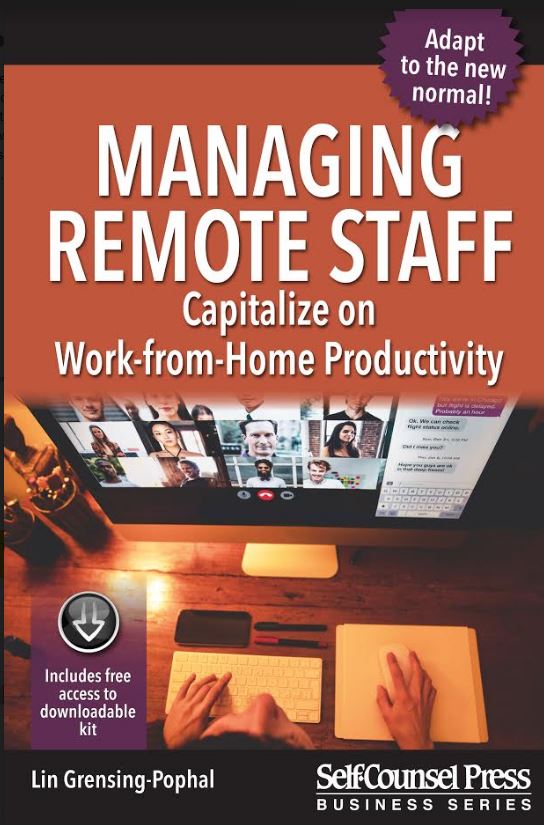 I’ve been interested in telecommuting – or what is more commonly these days referred to as remote work – for many years now. My interest prompted me to research and write a book on telecommuting in 1991. Having worked as a freelance business journalist for a long time, while also employed full-time as director of corporate communications in the education, energy, and healthcare industries, I had worked remotely with a variety of editors for many years. Why couldn’t I also work remotely as a corporate communications director for companies in other locations? (more…)
Should Organizations Do Away With Employee Surveys?
Tuesday, September 1st, 2020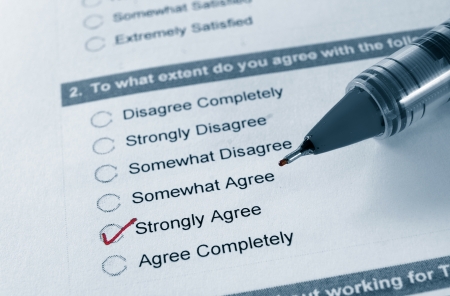
Peter Capelli recently wrote a piece for The Wall Street Journal suggesting that it’s time to do away with employee surveys. Like similar calls for doing away with performance reviews, there are some very good reasons to seriously consider doing away with them—many people don’t like them, response rates are often very low and, all too often, nothing is really done with the information received which serves to demotivate rather than engage employees.
However, I really wouldn’t agree with just getting rid of either employee surveys or performance reviews. With employee surveys, though, I would agree that many surveys are not done well and may not be yielding reliable, valid, and actionable information for HR leaders, managers, and organizations.
Every Employee a Brand Ambassador: A Message for Healthcare Providers (and others)
Thursday, October 10th, 2019 Think your clinical staff members—primarily doctors and nurses—are the only ones, or the most important ones to impact the patient experience? Think again. Every single one of your employees and volunteers has an opportunity to influence the patient experience while on the job, and off. In fact, every single one of these individuals has the opportunity to influence patients’ choices when they are considering a new provider or care facility.
While on the job, and off. (more…)
 Subcribe to This Blog
 Brand Evaluation
 CONTENT CREATION
 PR/MEDIA RELATIONS
 SOCIAL MEDIA
 STRATEGIC PLANNING